
October 2026
Singapore is one of Asia’s leading financial centers, with established regulation, enforcement, and disclosure requirements. But RepRisk data reveals a distinct pattern of business conduct risk.
Singapore’s business conduct risk profile differs from the rest of ASEAN.1 Fraud and money laundering account for a larger share of recorded incidents, while misleading communication is becoming more prominent. For financial institutions, these patterns highlight areas that may warrant closer due diligence.
In 20262, recorded risk incidents in Singapore rose by nearly 18%, while the ASEAN total fell by 4%. Singapore’s share of the region’s recorded incidents consequently reached 8%, its highest level in five years.3
# Financial crime stands out in Singapore’s risk incident profile
Across the rest of ASEAN, recorded business conduct risk incidents more often involved physical and social impacts. In 2026, impacts on communities were linked to 37% of incidents, impacts on ecosystems and biodiversity to 21%, and local pollution to 14%.
Singapore’s profile looks different. Fraud was linked to 30% of recorded incidents, compared with 17% across the rest of ASEAN. Product-related risks, covering health and environmental issues, accounted for 23%, versus 12% elsewhere in the region.
Singapore also stood out for cyberattacks, money laundering, and privacy violations. Their respective shares of recorded incidents were 4.6, 2.9, and 2.1 times those in the rest of ASEAN.
# Nearly a third of Singapore’s business conduct risk incidents were linked to fraud
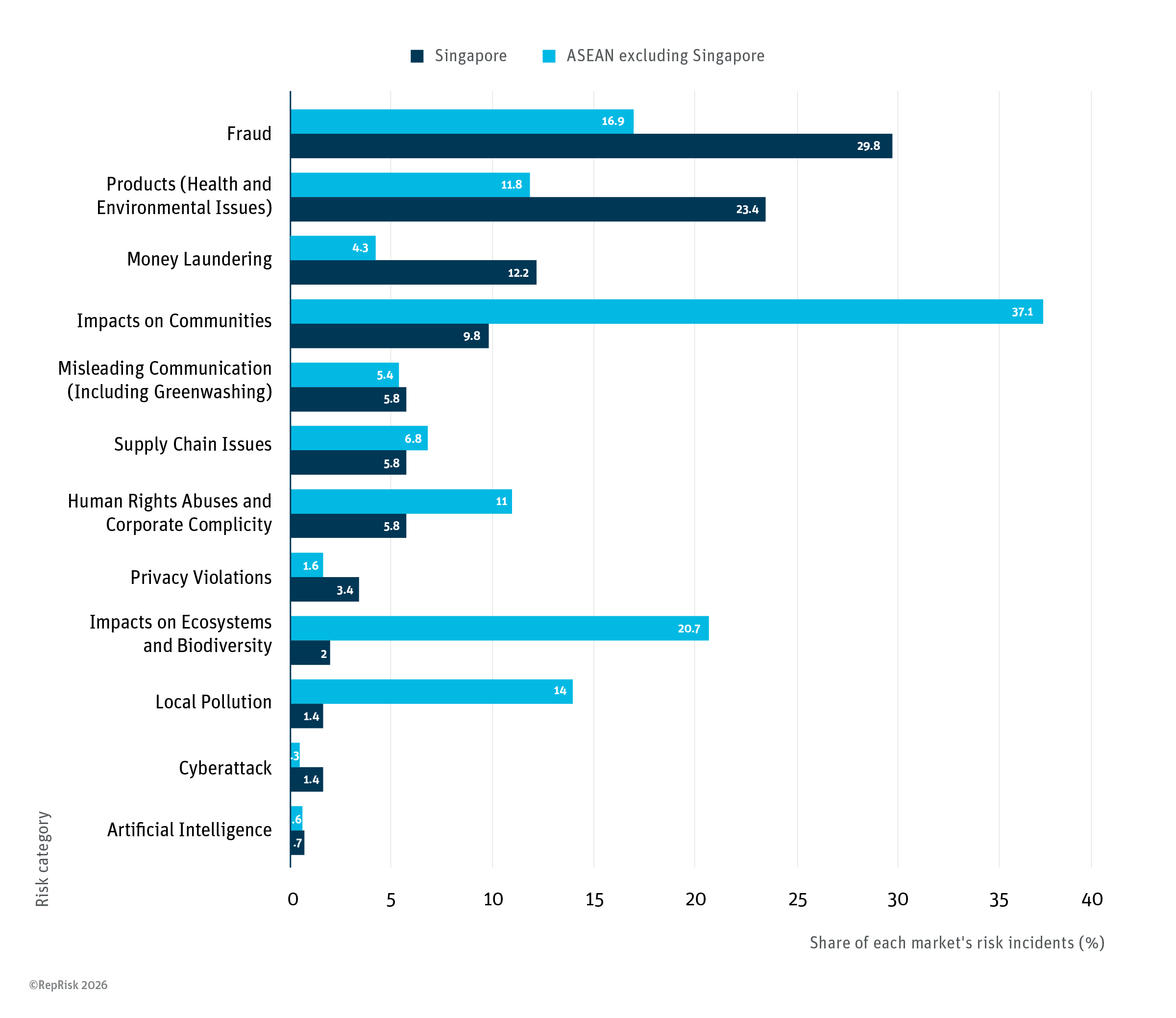
Fig 1. A sample of RepRisk Issues and Topic Tags as a share of recorded risk incidents, Singapore against ASEAN excluding Singapore.4 Incident year: July 1, 2025 to June 30, 2026.
# The share of fraud cases in Singapore has nearly doubled in five years
The share of Singapore’s recorded incidents linked to fraud rose from 16% in 2022 to 30% in 2026. The pattern is particularly pronounced in the financial sector. In Financial Services, fraud was linked to around half of recorded incidents throughout the five-year period, peaking at 61% in 2025. In Banks, the share reached 52% in 2026.
# Fraud features prominently across Singapore’s financial sector

Fig 2. Fraud as a share of recorded risk incidents in the Banks and Financial Services sectors, compared with all recorded risk incidents in Singapore. Incident years ending June 30.
Fraud-related incidents in Financial Services also increased in absolute terms, from 9 to 33, while the sector’s total recorded incidents rose from 20 to 71.
# Cross-border exposure puts money laundering in focus
Singapore’s risk exposure extends well beyond its borders. Recorded incidents were linked to companies headquartered in 67 countries. Companies headquartered outside Singapore accounted for 45% of its country–incident links, compared with an ASEAN average of 28%.
Cross-border exposure also makes money laundering an important area of scrutiny. RepRisk’s Money laundering Topic Tag5 was linked to 12% of Singapore's risk incidents in 2026, compared with 4% across the rest of ASEAN. Over the five-year period, Singapore accounted for 18% of ASEAN’s money-laundering linkages, with a pronounced spike in 2024, after a major money-laundering investigation became public.6
Singapore has since been strengthening its response to financial crime, with measures aimed at improving transparency and accountability. Recent reforms have tightened oversight of company ownership and corporate service providers, expanded disclosure requirements, and introduced new measures targeting fraud and scams.7
# Money laundering features nearly three times as prominently in Singapore vs the rest of ASEAN
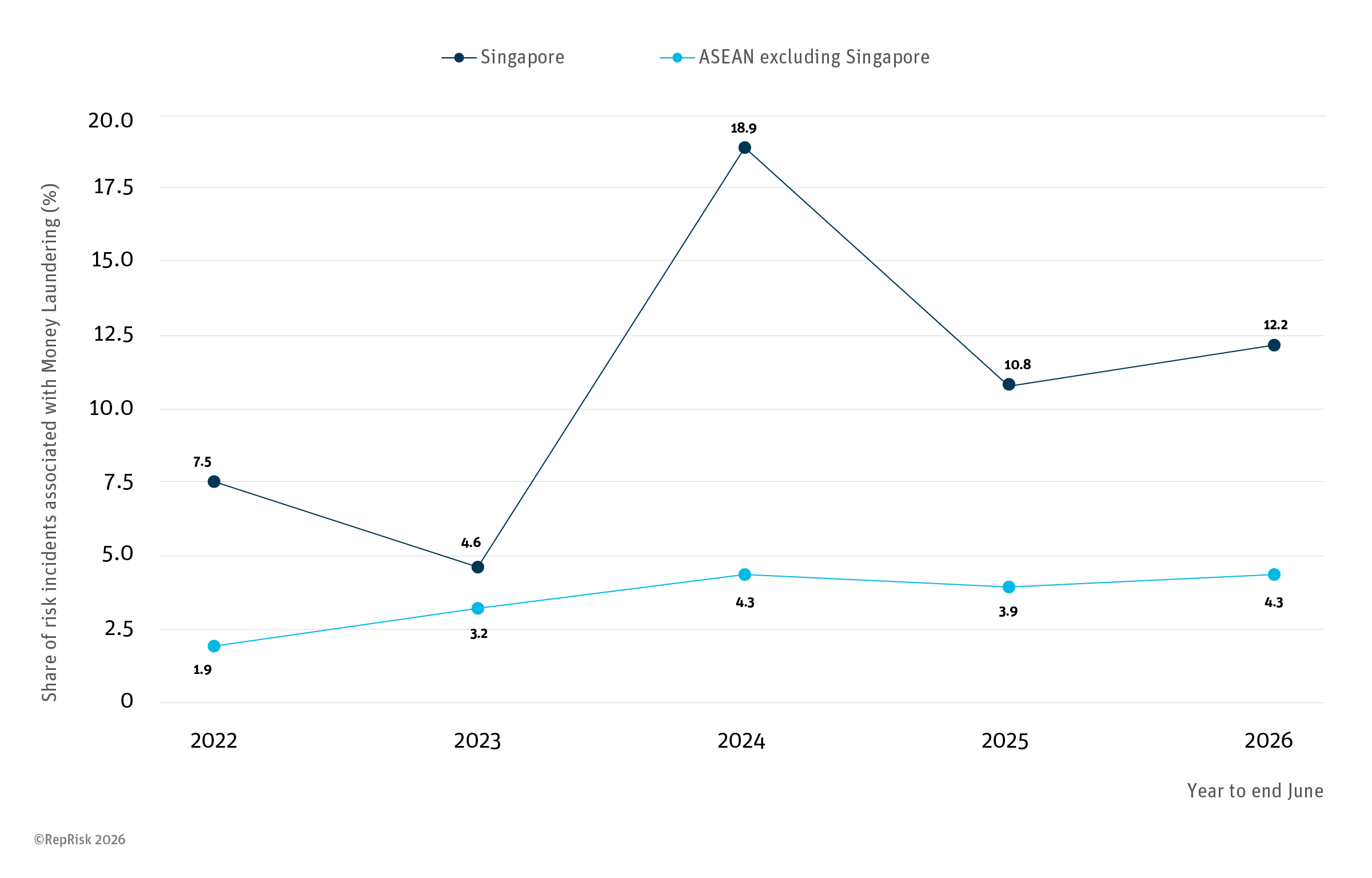
Fig 3. Share of risk incidents carrying the Money laundering Topic Tag, Singapore against ASEAN excluding Singapore. Incident years ending June 30.
# Misleading communication is gaining prominence across sectors
Financial crime is not the only risk area becoming more prominent. Misleading communication, including greenwashing, accounted for a growing share of recorded incidents across both Singapore and ASEAN.
Across ASEAN, its share of recorded incidents rose from 1.7% to 5.4% over the five-year period. In Singapore, the share increased from 2.5% to 5.8%.
Misleading communication was particularly prominent in transition-related sectors. In 2026, 13% of Alternative Energy incidents across ASEAN were linked to misleading communication, the highest share of any sector shown and more than twice the ASEAN average of 5.4%. The pattern highlights the growing relevance of claims-related risk in sectors central to the energy transition.8
# Misleading communication is gaining prominence across ASEAN sectors
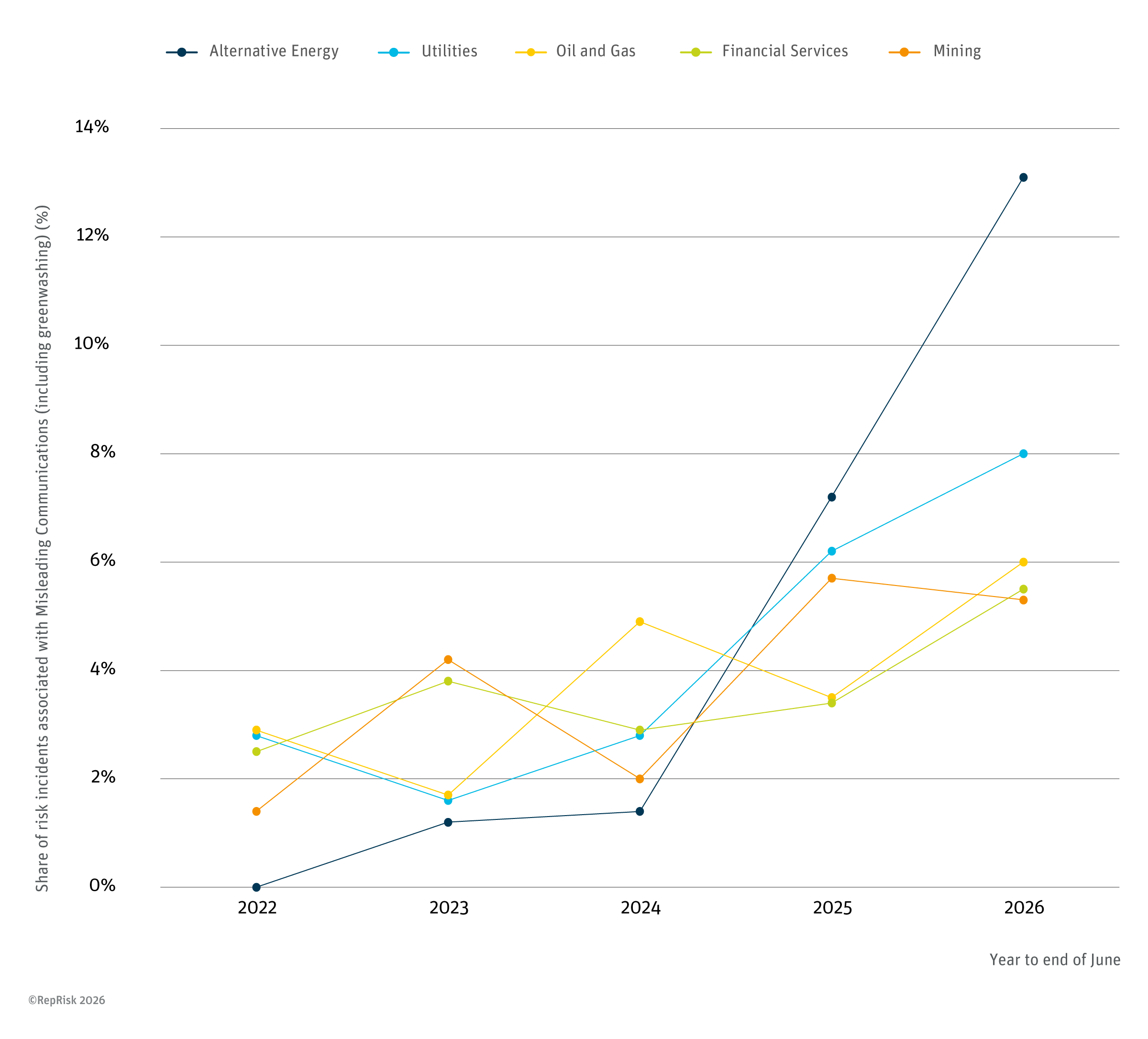
Fig 4. The Misleading communication (including greenwashing) Issue as a share of selected sector's ASEAN risk incidents. Incident years ending June 30.
The rise in misleading communication comes as Singapore strengthens sustainability reporting requirements and rules for retail ESG funds, creating clearer benchmarks against which environmental claims can be assessed.9
# Due diligence needs a connected view of risk
Singapore’s data highlights why financial and sustainability disclosures alone may not provide a complete picture of business conduct risk. Fraud is particularly prominent in financial services, money laundering features more heavily than elsewhere in ASEAN, and cross-border ownership adds another layer of complexity. At the same time, misleading communication is becoming more common, bringing greater attention to how companies substantiate their claims.
For banks and asset managers, the value lies in connecting these signals. Combining information on companies, sectors, ownership, and geographic exposure can support more targeted counterparty screening, portfolio monitoring, and enhanced due diligence.
Get in touch
Learn how RepRisk helps organizations identify emerging risk patterns, benchmark exposure across companies and markets, and strengthen due diligence. Request a demo.
On money laundering, the Monetary Authority of Singapore (MAS) imposed composition penalties totaling SGD 27.45 million on nine financial institutions in July 2025, alongside prohibition orders and reprimands against 18 executives, concluding enforcement action linked to the SGD 3 billion money-laundering case (See Monetary Authority of Singapore, "MAS takes regulatory actions against 9 financial institutions for AML-related breaches," Media Release, July 4, 2025, mas.gov.sg.). The Financial Action Task Force’s Mutual Evaluation Report of Singapore – 2026 assessed Singapore’s regime as strong, while calling for stronger enforcement in the digital payment token sector and more dissuasive sanctions.
The Corporate Service Providers Act (2024) requires every firm providing corporate services in Singapore to register with ACRA, prohibiting anyone from acting as a nominee director by way of business unless a registered provider arranged the appointment and assessed them as fit and proper. The Companies and Limited Liability Partnerships (Miscellaneous Amendments) Act removed the grace period for maintaining a register of registrable controllers and moved nominee director and nominee shareholder registers, including the identities of the nominators, into a central register held by ACRA. The Corporate and Accounting Laws (Amendment) Act (2025) stipulates that a money laundering conviction under the Corruption, Drug Trafficking and Other Serious Crimes (Confiscation of Benefits) Act 1992 disqualifies a person from acting as a director.
Copyright 2026 RepRisk AG. All rights reserved. RepRisk AG owns all intellectual property rights to this report. This information herein is given in summary form and RepRisk AG and/or the third party contributors to this report make no representation or warranty that any data or information supplied to or by it or them is complete or free from errors, omissions, or defects. Without limiting the foregoing, in no event shall RepRisk AG and/or the third party contributors to this report have any liability (whether in negligence or otherwise) to any person in connection with the information contained herein. Any reference to or distribution of this report must include a link to the content to provide sufficient context. The information provided in this presentation does not constitute an offer or quote for our services or a recommendation regarding any investment or other business decision, and is not intended to constitute or to be used as a substitute for legal, tax, accounting, or other professional advice. Please note that the information may have become outdated since its publication. Should you wish to obtain a quote for our services, please contact us.
Decision‑grade means suitable for identifying and prioritizing risk exposure as an input into a broader decision‑making process. RepRisk data does not determine legality, compliance, thresholds, or required actions, and does not prescribe investment, procurement, or engagement decisions.