June 2026
Green ambitions, grey areas: Germany's greenwashing divergence
# RepRisk data shows greenwashing risk remains persistent across Germany's economy, but unlike other major markets, its exposure is no longer accelerating
Germany has long played a leading role in Europe's climate and sustainability agenda.
The Energiewende set the agenda for national and EU-level energy transition policy for over a decade, and Germany was among the first in Europe to pass mandatory supply chain due diligence legislation requiring companies to identify and address human rights and environmental risks through their global operations.
Yet RepRisk data ranks Germany third globally for greenwashing-related business conduct risk incidents1 over the past five years, behind only the United States (US) and the United Kingdom (UK). The trajectory, however, sets it apart.
# Top 10 countries with greenwashing risk exposure over the last five years
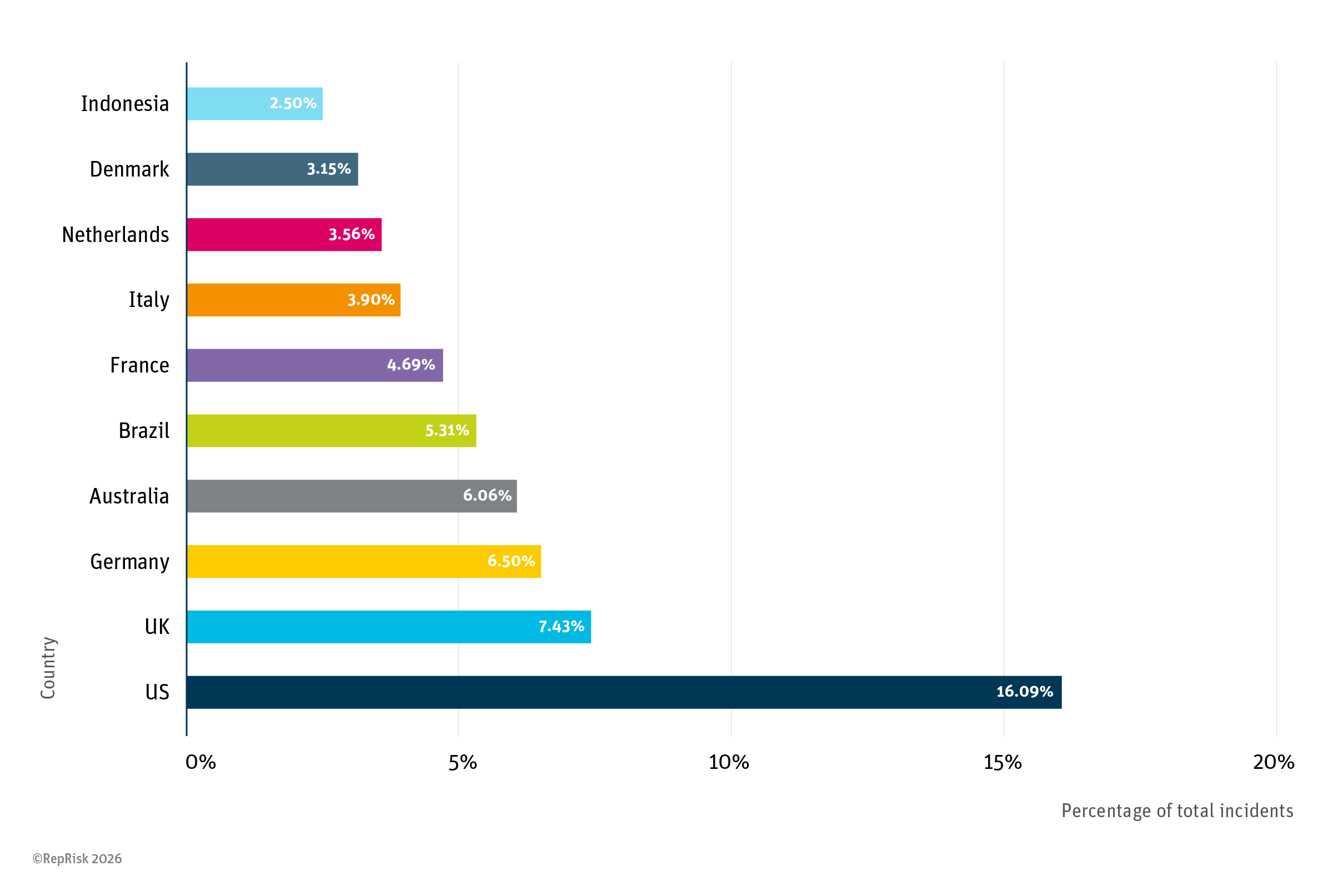
Fig 1: Percentage share of all greenwashing-related risk incidents recorded on the RepRisk Platform between 2021-2026. 2
# Stable volumes, declining share
Looking beyond headline rankings, the data shows a clear divergence between markets where greenwashing exposure is accelerating and those where it has stabilized.
While countries such as Australia, Brazil, and the UK show a clear expansion in incident volume over the last five years, despite some year-to-year variation, Germany’s numbers have remained relatively stable. After rising to a peak in 2023-24, incident volumes in Germany declined and have since stabilized, ending the five-year period almost exactly where they began. This pattern suggests a market where enforcement is already well established.
# Number of greenwashing-related risk incidents by country
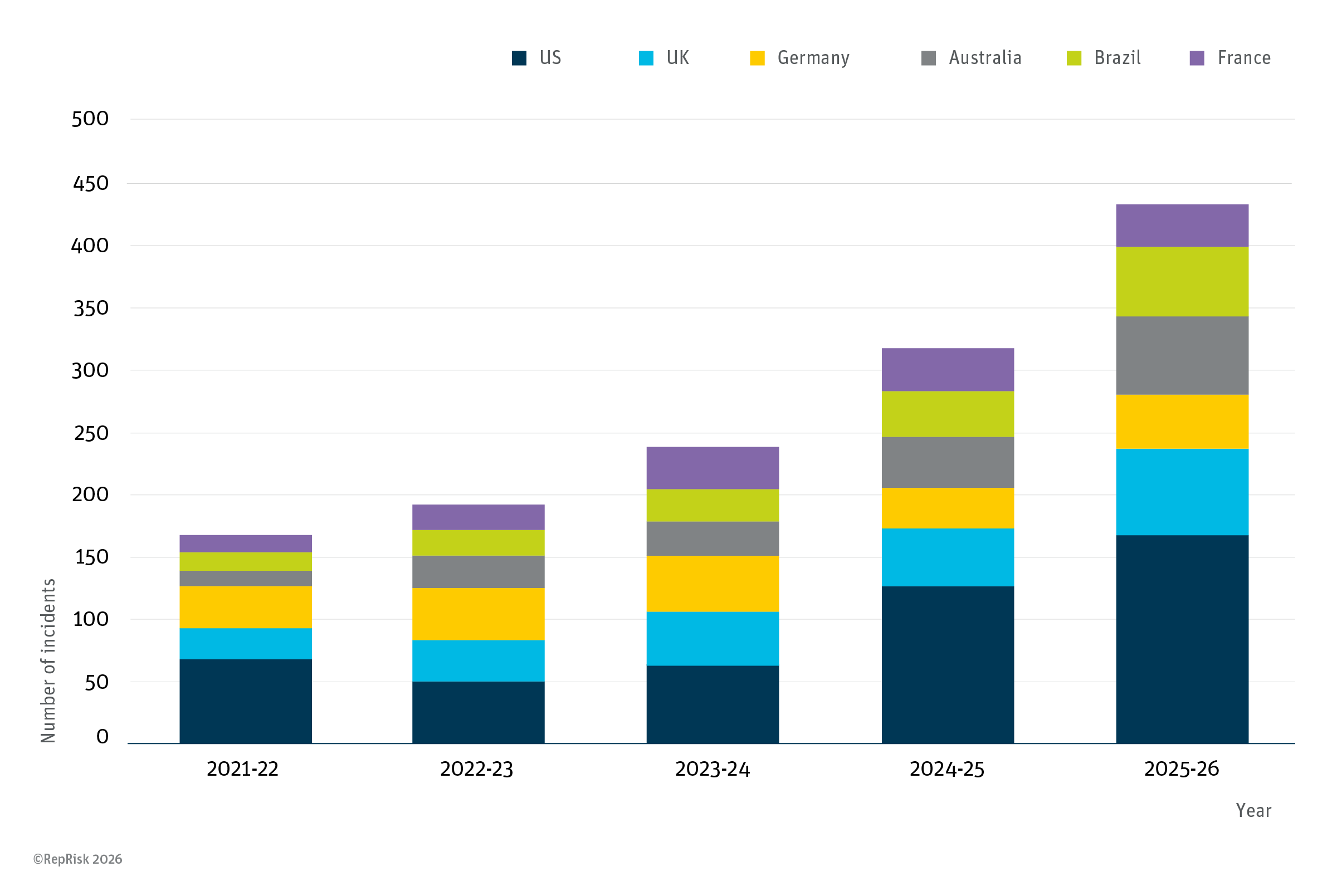
Fig 2: Absolute count of greenwashing-related risk incidents recorded on the RepRisk Platform for select countries. 3
This stability is even more pronounced in relative terms. Germany is the only country in the sample to record a sustained decline in its share of global greenwashing-related incidents since 2022-23, dropping from 22% to only 8% by 2025-26. By contrast, other major markets, including the US, UK, Australia, Brazil, and France, show more volatile patterns over the same period, with shares rising and falling year to year.
Germany is therefore not seeing the same escalation in greenwashing exposure as its peers, but neither is it seeing a material decline.
# Share of greenwashing-related risk incidents by country
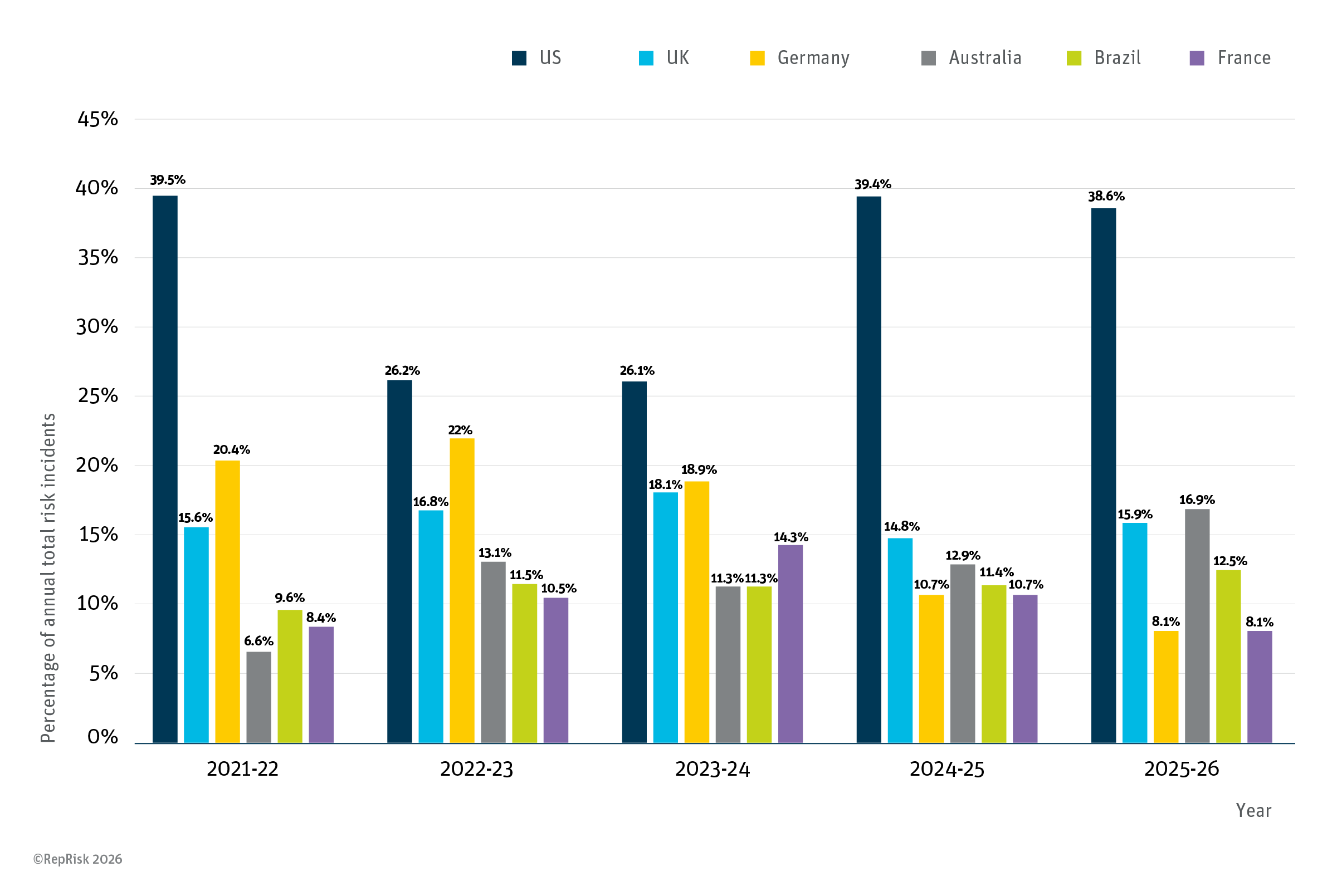
Fig 3: Annual percentage share of greenwashing-related risk incidents between the five countries with the highest overall exposures.4
# Established scrutiny, not lower risk
RepRisk data indicates that NGOs have been filing lawsuits over alleged sustainability claim failures for years, while German courts have moved in parallel to define the boundaries of acceptable environmental messaging.
The country’s post-Fukushima nuclear exit and the subsequent disruption of Russian gas supplies created an urgent demand for alternative energy sources, and, alongside it, a wave of "transition fuel" narratives that are increasingly being challenged.
Large-scale infrastructure projects, such as LNG infrastructure linked to Germany’s energy industry, have become focal points for scrutiny, often linked to impacts on protected biodiversity areas in the most severe risk incidents.
# Sector distribution of German greenwashing-related risk incidents
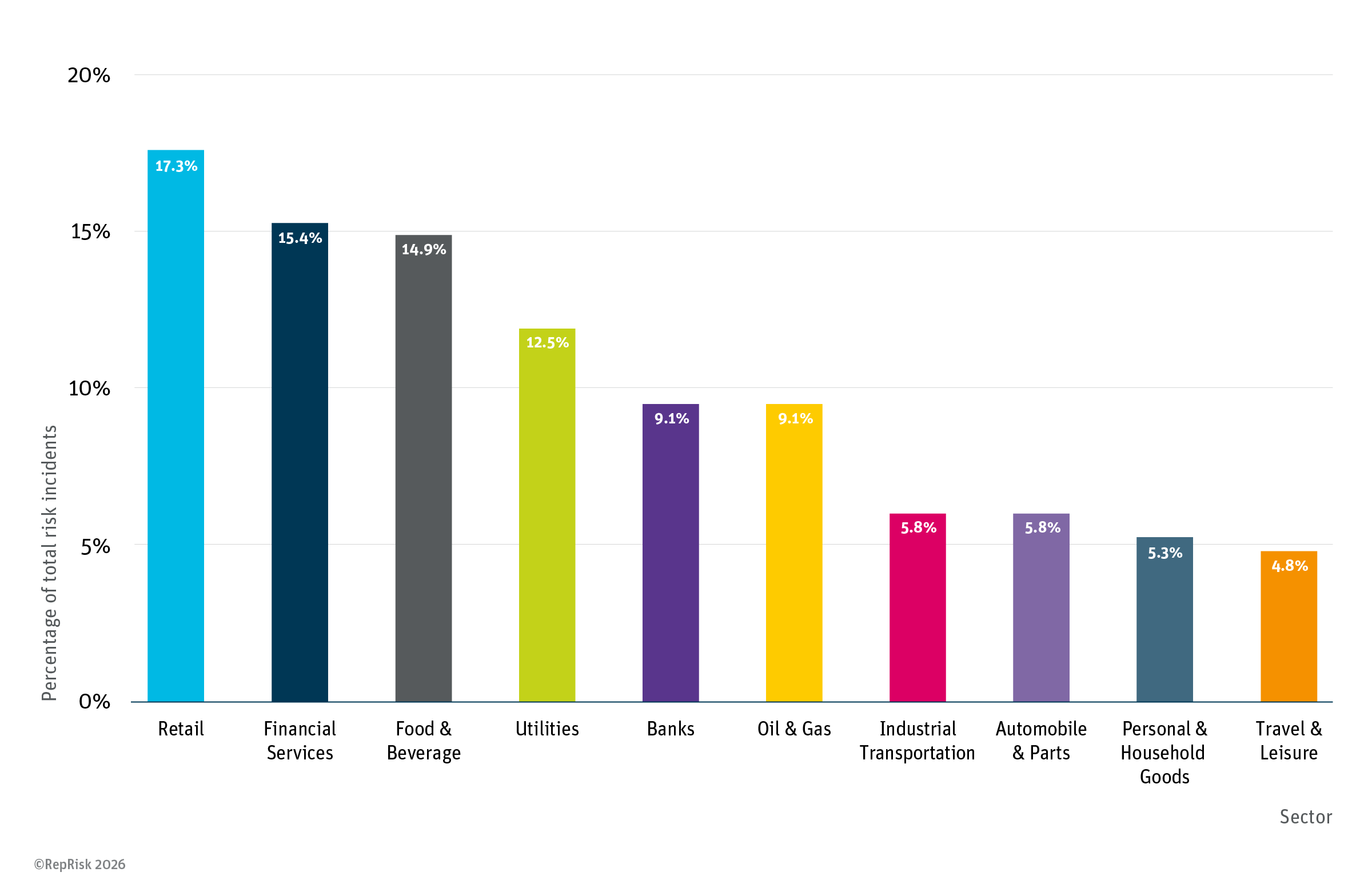
Fig 4: Top 10 sectors with greenwashing-related risk incidents linked to Germany and their relative share of incidents, 2021-20265.
Sectoral exposure runs wide, with enterprises across food and beverage, retail, and financial services having faced lawsuits, fines, and advertising bans over misleading sustainability claims.
With risk spread across consumer-facing sectors, the data suggests that greenwashing is now a baseline concern for any German business communicating on sustainability.
# A new regulatory floor
Germany's courts have been setting standards ahead of formal regulation for some time. From September 2026, that enforcement floor rises across the board.
The Empowering Consumers for the Green Transition Directive, transposed into German law in February 2026, bans generic environmental claims and offset-based carbon-neutral labels across all consumer-facing sectors.
For institutions financing German corporates, and for asset managers with German equity and credit market exposure, greenwashing is a forward-looking risk factor.
RepRisk's Business Conduct Risk Intelligence Report 2026 shows a 23% increase in greenwashing as a top material risk over the past 12 months, compared with the previous 1-3 years, making it the third-biggest concern for C-suite executives. Identifying it early depends on accurate, human-vetted intelligence that tracks what companies say against what they do.
Get in touch
Learn how RepRisk can help your organization uncover emerging risks and benchmark exposure across markets. Request a demo to see the RepRisk Platform in action.
The Greenwashing Topic Tag is defined as capturing risk incidents where environment-related statements, declarations, actions, or communications do not clearly and fairly reflect the actual environmental performance of an entity, or a product, or services. Misleading communication can occur through omission of information or the provision of false or deceptive information. Greenwashing can occur either intentionally or unintentionally.
The Misleading Communication Issue refers to when a company manipulates the truth in an effort to present itself in a positive light, and in the meantime contradicts this self-created image through its actions. It also refers to when a company misleads consumers about its products and services. This includes, for example, “greenwashing,” false advertising, off-label marketing, “astroturfing,” etc.
Clients have the ability to research Topic Tags within the RepRisk Platform, and to analyze which companies, projects, sectors, countries, and other entities are exposed to risks related to each Tag.
Copyright 2026 RepRisk AG. All rights reserved. RepRisk AG owns all intellectual property rights to this report. This information herein is given in summary form and RepRisk AG and/or the third party contributors to this report make no representation or warranty that any data or information supplied to or by it or them is complete or free from errors, omissions, or defects. Without limiting the foregoing, in no event shall RepRisk AG and/or the third party contributors to this report have any liability (whether in negligence or otherwise) to any person in connection with the information contained herein. Any reference to or distribution of this report must include a link to the content to provide sufficient context. The information provided in this presentation does not constitute an offer or quote for our services or a recommendation regarding any investment or other business decision, and is not intended to constitute or to be used as a substitute for legal, tax, accounting, or other professional advice. Please note that the information may have become outdated since its publication. Should you wish to obtain a quote for our services, please contact us.