February 2026
Viewpoint: Sustainable investing in 2026
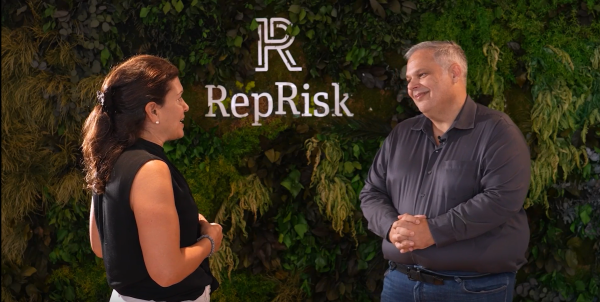
At the end of January, RepRisk hosted a webinar bringing together sustainability and investment professionals to explore how responsible investing is evolving in 2026. We didn’t have time to answer every audience question live, so our moderator, Jenny Mathilde Nordby, has addressed the most common questions below. To dive deeper into the discussion, watch the on‑demand recording.
# 1. How have expectations shifted for sustainability strategies?
Expectations have moved from broad commitments to demonstrable performance, transparency, and financial relevance. Investors now look for measurable outcomes, consistent implementation, and data that stands up to scrutiny. Values‑led language has given way to materiality, value preservation, and value creation, a recognition that business conduct issues quickly translate into financial, operational, and reputational impacts.
But what’s changed most is the role of technology and advanced AI. New tools, including agentic AI and geospatial intelligence, are enabling more precise, granular, and forward‑looking analysis in opaque markets, which is especially relevant for private markets and supply chain monitoring. As a result, sustainability considerations are increasingly embedded into capital allocation, strategy, and risk management - all essential to identifying opportunities, managing downside risk, and earning long‑term trust.
# 2. What does the rise in greenwashing reveal about the market?
A rise in greenwashing doesn’t signal a retreat from sustainable finance, it signals a more mature, demanding market. As sustainability strategies scale, claims are being tested more rigorously against real-world outcomes. Regulators, investors, and clients expect clearer evidence and less tolerance for vague or inflated statements.
The growing link between greenwashing and biodiversity risks, in particular, reflects mounting pressure on companies and financial institutions to demonstrate credible progress as nature-related risks become more material. Sustainable funds now total nearly USD 3.3 trillion in assets, putting sustainability-linked products firmly under the spotlight. Inaccurate claims risk distorting capital allocation, mispricing risk, and eroding trust. Greenwashing has become a material liability: investors, regulators, and clients increasingly expect robust data, defensible processes, and transparency.
# 3. Which risks tend to surface before performance deteriorates – and how early do markets detect them?
The answer depends heavily on sector and geography, but negative business conduct events commonly act as early warning signals. Evidence shows that these risks often materialize before financial underperformance becomes visible, particularly when they reflect structural weaknesses such as poor governance, regulatory non-compliance, or systemic environmental exposure.
Recent research using RepRisk incident data and FIS securities lending data shows how markets incorporate these signals differently across regions. In the US, stock prices and short-selling activity often react before business conduct risk incidents are publicly disclosed, suggesting that informed market participants spot risks early. In Japan, reactions vary by event type and timing, while in Europe, regulatory guidance shapes market responses, dampening lending-market signals. These patterns suggest that monitoring emerging risk incidents, and understanding how local markets price them, can help investors identify stress points well before performance breaks.
# 4. How do asset managers integrate third party business conduct data into private credit decision-making?
RepRisk has found that third-party business conduct data is most effective in private credit when it is embedded directly into credit risk processes rather than treated as a separate overlay. Asset managers typically use this data during pre-investment due diligence to identify financially material conduct and reputational risks linked to borrowers and sponsors, especially where disclosure is limited. These insights are then factored into underwriting decisions: informing deal structuring, covenant design, pricing, escalation to investment committees, or, in some cases, exclusion. Post-investment, continuous monitoring and alerts allow managers to detect emerging controversies early, support engagement with sponsors or borrowers, and manage downside risk over the life of the loan, including in syndicated or late-stage deals where direct access to management is constrained.
# 5. How do sponsors avoid “blind spots” in private companies with limited disclosures?
Blind spots arise when sponsors rely solely on company-provided information. In private markets, where transparency is uneven and data is often fragmented, relying solely on Due Diligence Questionnaires or company-provided sustainability metrics leaves gaps. Just as important is recognizing that meaningful sustainability insight extends beyond ratings and numerical scores. Sponsors benefit from taking a holistic view of behavior patterns, community impacts, and qualitative signals that reveal not just what a company delivers, but how it operates. While often difficult to quantify, these interconnected factors are highly predictive of long-term risk. Using third-party sources that capture business conduct and reputational risks across media, NGOs, regulators, and local stakeholders helps surface issues that may not appear in data rooms – particularly in complex sectors and geographies.
Finally, embedding sustainability risk analysis across the full investment lifecycle instead of treating it as a one-off diligence exercise, creates a more resilient approach. Ongoing monitoring allows sponsors to identify emerging risks early, engage portfolio companies or GPs proactively, and protect value – even when direct access to management or consistent disclosures are limited.
# 6. How can financial institutions turn sustainability into a competitive advantage?
Sustainability becomes a differentiator when business conduct insights are integrated into core investment and risk processes, rather than treated as compliance tasks or sitting outside of decision-making processes. Institutions that treat conduct data as financially material can better manage downside risk, strengthen stakeholder trust, and support long‑term value creation.
In practice, this means embedding monitoring tools that surface emerging risks, and incorporating business conduct considerations into research, stewardship, and portfolio construction. This helps identify outliers, prioritize engagement, and meet regulatory expectations. Proactive engagement and early‑warning signals can ultimately improve credit outcomes, reputation management, and investor confidence – moving sustainability from compliance toward performance and resilience.
Watch webinar replay
Gain actionable insights to inform your investment strategy by watching the full webinar on demand.
Bio - Jenny Mathilde Nordby, VP, Global Head of Executive Strategy and Engagement
Jenny Mathilde Nordby is VP, Global Head of Executive Strategy and Engagement at RepRisk, where she leads the company’s executive outreach, engagement strategy, and the RepRisk Ambassador Forum. Since joining in 2018, she has held senior leadership roles spanning business development, partnerships, and market intelligence.
Before joining RepRisk, Jenny worked at SEB – first, as an Account Manager covering Nordic institutional and corporate clients within Client Coverage, then in Institutional Sales, and finally in Corporate Risk Advisory and Analytics within Capital Markets. During her tenure at SEB, she also worked in rotations at other locations and departments in London, Singapore, and Stockholm.
Jenny holds a dual Bachelor's degree in Economics and International Relations from the University of Oslo, in Norway, and a Master of Science in Management and Finance from Imperial College, London, in the UK. She completed exchange semesters at Dartmouth College, New Hampshire, and at the American University, in Washington D.C., USA.